If you’ve spotted fleas in your home, on your pets, or in the carpet, you’re not dealing with a one-off. By the time anyone notices an adult flea, the population has been building for weeks and 95% of it is hidden as eggs and larvae in places no household spray reaches. This page walks through what flea control actually involves, how to tell whether you have an infestation, what professional treatment costs in Melbourne, and how to pick a flea pest control company that won’t leave you doing it again in three weeks.
Key takeaways
- Flea control treatment in Melbourne: $175 to $300, takes 60-90 minutes, clears in one visit.
- The IGR (insect growth regulator) is the difference between professional and DIY, without it, eggs survive and re-infest 2-3 weeks later.
- Adult fleas are only 5% of the population; the other 95% is hidden in carpets and soft furnishings.
- Same-day bookings available across Greater Melbourne, Brunswick to Werribee, Frankston to Box Hill.
- Pet preventative protects the pet but doesn’t treat the home, both layers needed for full clearance.
What flea control actually involves
Flea control isn’t just spraying. The job has three parts: kill the adults, break the life cycle, protect against re-infestation. Skip any one of those and the problem comes back.
The two-product system
A professional flea control treatment uses two products in combination. The first is an adulticide, which kills adult fleas on contact. The second is an insect growth regulator (IGR), which prevents flea eggs from hatching and stops larvae from maturing into biting adults. The IGR is what no supermarket flea bomb does, and it’s the reason a single professional treatment outperforms three or four DIY rounds.
Treatment timing and coverage
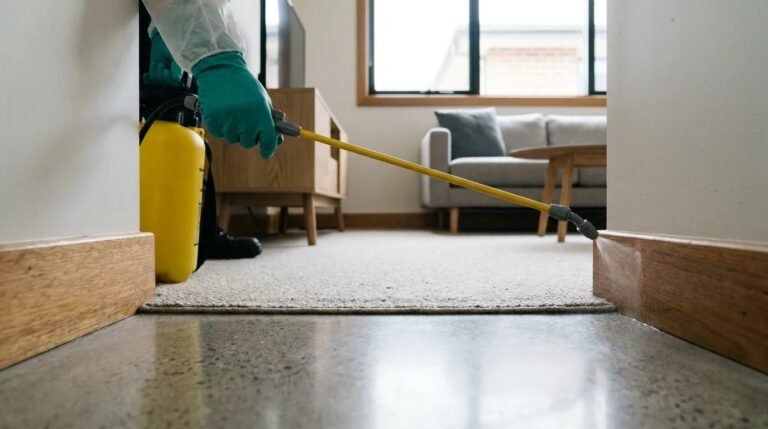
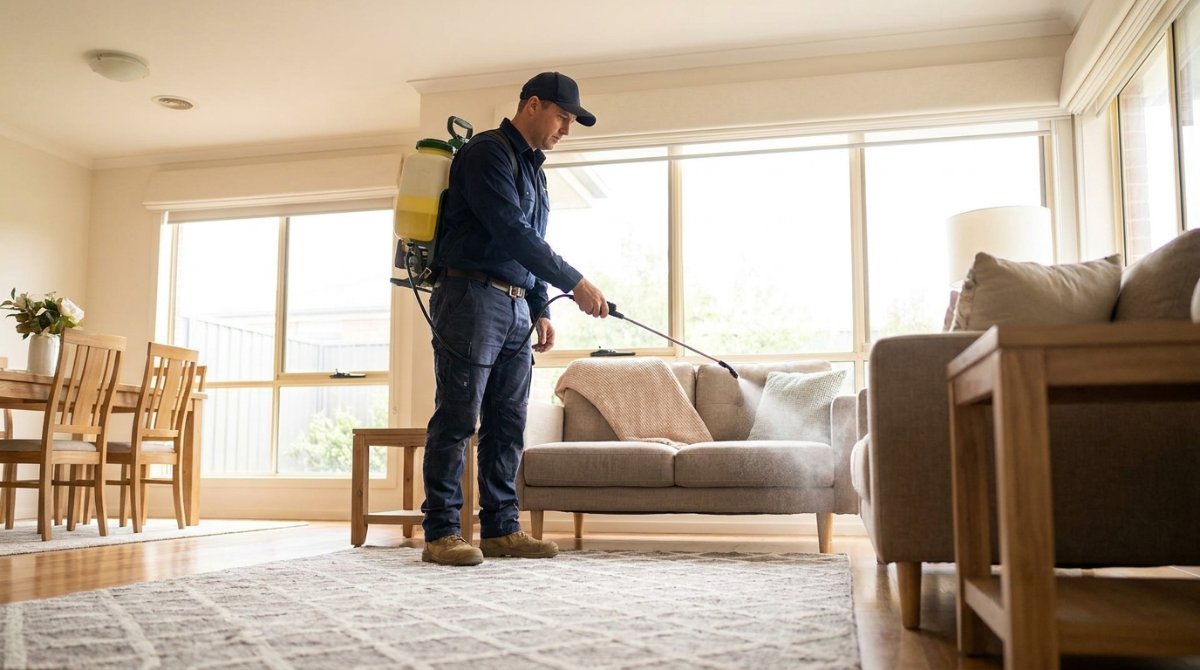
The treatment itself takes 60 to 90 minutes for a standard 2-3 bedroom home. The technician treats every surface fleas use to harbour: carpet pile, skirting board edges, cracks in floors, soft furnishings, pet bedding, and any low-traffic corners where flea dirt has built up. Outdoor areas can be added if you’ve got pets that spend time in the yard, see our outdoor flea control guide.
After treatment
After application you and any pets need to stay out of treated rooms for 2-4 hours while the product dries. Once dry, the property is safe to re-enter. The residual action keeps working against newly-hatched fleas for 8-12 weeks, which is what stops the cycle from restarting.
Signs you have a flea infestation
Visible adult fleas are the symptom most people notice first, but they’re a late-stage signal. Earlier signs are easy to miss.
Five reliable indicators of an active infestation
- Pets scratching more than usual despite being on flea preventative
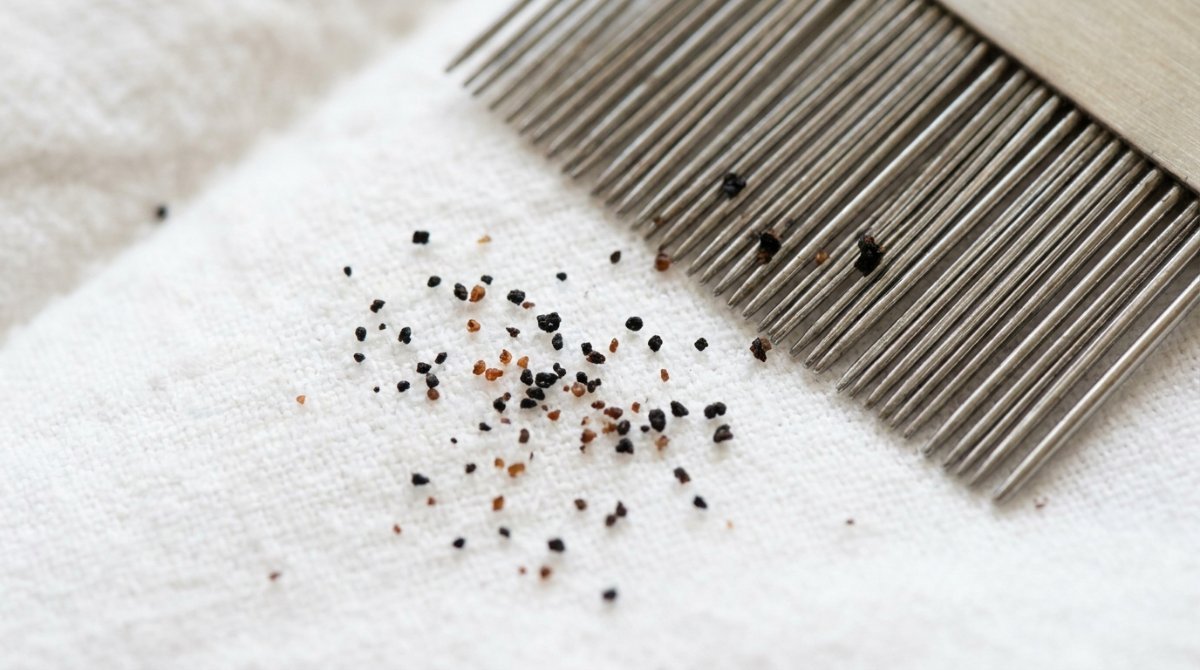
- Small black specks (flea dirt) in pet bedding or along skirting boards
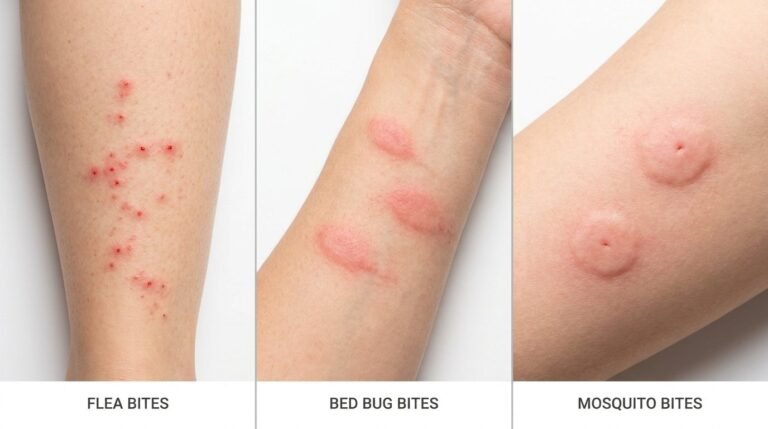
- Itchy red bites on your ankles or lower legs that show up overnight
- Fleas jumping onto white socks when you walk slowly across carpet
- A returning issue 2-3 weeks after a DIY treatment
Why fleas are hard to kill
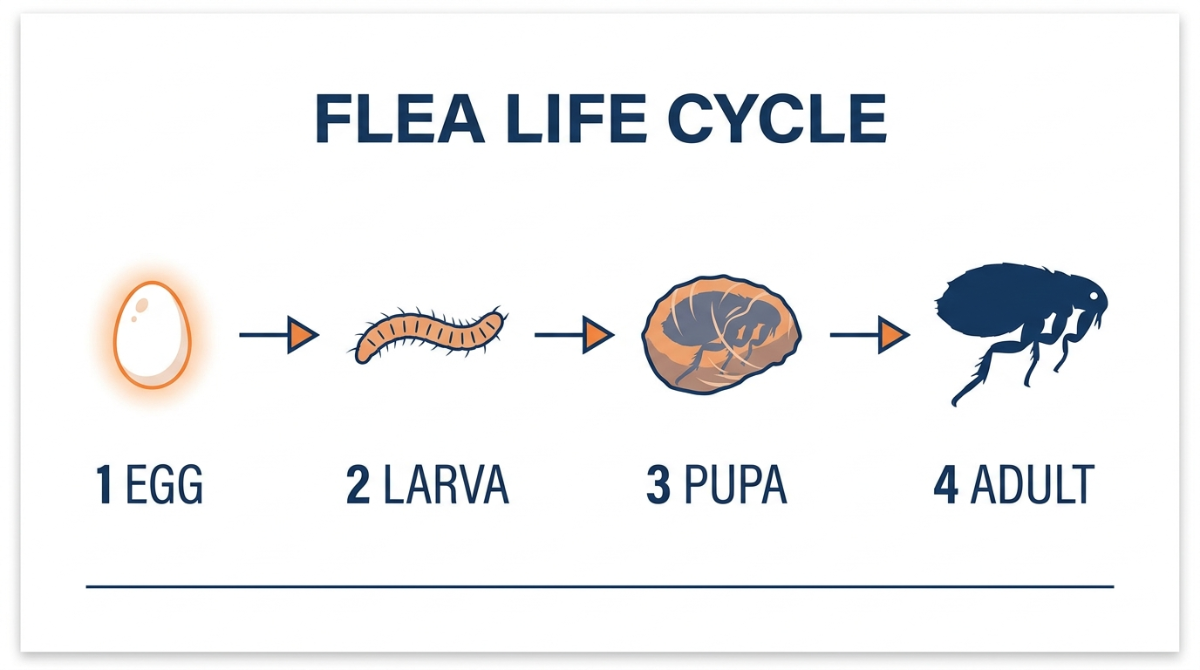
The flea life cycle has four stages: egg, larva, pupa, adult. Adult fleas (the ones you see) are only about 5% of the total population. The other 95% are eggs in the carpet, larvae feeding on flea dirt and organic debris, and pupae waiting in cocoons that resist most insecticides. A supermarket spray kills the adults, the cocooned pupae sit through the treatment unharmed, and a fresh wave of adults emerges 2-3 weeks later.
Cat fleas are the species behind it
Cat fleas (Ctenocephalides felis) are the species behind nearly every Melbourne household infestation, even when no cats are involved. They jump from foxes, possums and other tenants’ pets onto your dog, then off into your carpet. The pet preventative protects the pet. It doesn’t protect the home.
Professional flea control vs DIY treatments
The DIY market is full of products that work on adult fleas. The problem is they don’t reach the larval and pupal stages, and that’s where the next wave of biting adults is sitting.
Supermarket flea bombs (foggers)
Cost $30-$60 per round. Release pyrethrin or permethrin into the air, kill exposed adults. Don’t penetrate carpet pile to reach larvae, don’t include an IGR, eggs survive and hatch. Most users go through 3-4 rounds totalling $150-$250 with no guaranteed result.
Sprays applied to carpet
Better than foggers because the product makes contact with fibres. But active ingredient is usually a single adulticide at lower concentration than professional formulations, with no IGR. Coverage is also a problem, most people miss the under-couch zone, the closet floor, and the cracks where larvae actually live.
Salt and bicarb / natural remedies
Sprinkled on carpet, vacuumed up after a few days. Works to a limited degree against adult fleas in the immediate area but doesn’t touch eggs or larvae and produces inconsistent results. For the full breakdown, see our natural flea remedies guide.
Professional flea pest control
Higher-grade products, hits the right surfaces, includes the IGR. Cost is comparable to or less than running multiple DIY rounds, and the residual protection runs 8-12 weeks. The treatment usually clears the infestation in one visit.
Pet-safe flea control: products and precautions
APVMA-registered products
Every product we use is registered with the Australian Pesticides and Veterinary Medicines Authority for residential pest control. Once dry (2-4 hours), residue is non-toxic to mammals at the application rate. Cats, dogs, and rabbits can re-enter treated areas safely. Children can play on the floor.
Special precautions for households with pets
- Birds: cover the cage or move to an untreated room during application + drying window
- Fish tanks: close lids, turn air pumps off temporarily, restart once aired out
- Reptiles: same precautions as birds
- Don’t bathe pets immediately before treatment, flea preventative residue interacts with the carpet treatment
- Don’t vacuum treated areas for 7-10 days, strips out the residual action
Continue with pet preventative
Continue with your pet’s normal flea preventative (NexGard, Bravecto, Advantix). The home treatment kills fleas in the environment. The pet preventative kills any new flea that bites your pet. Both layers together is what stops re-infestation. See our tick and flea control guide if pets spend time in bushland.
Flea control cost in Melbourne

Standard pricing
Standard flea control treatment in Melbourne sits at $175-$300. A 1-2 bedroom flat with mild infestation lands at the lower end. Multi-storey homes, larger floor areas, or properties with active visible infestation land higher. We quote up front, no surprises.
What changes the price
- Bedroom count above three
- Two-storey properties (more travel time and product)
- Severe active infestation that needs extra product saturation
- Optional outdoor yard treatment for pets that spend time outside
- Follow-up visits included in the package
Cost comparison vs DIY
A typical Melbourne household that doesn’t deal with fleas properly the first time spends $400-$700 across DIY attempts plus an eventual pro visit, versus $175-$300 if they call us first. End-of-lease tenants who let their agent book flea treatment from the bond typically pay $250-$450 (covered in detail on our end-of-lease flea treatment page).
Choosing a flea pest control company in Melbourne
Four things separate a flea pest control company that works from one that doesn’t.
1. Licensing
Pest control in Victoria requires a current pest control licence. Ask for the licence number. A reputable operator will give it to you without hesitation and you can verify it. Our licence number appears on every treatment receipt we issue.
2. Products used
If the company can’t tell you they’re using an IGR plus an adulticide, walk away. Generalist pest control operators sometimes treat fleas with the same product they use for ants, which doesn’t break the flea life cycle.
3. Specialisation
We focus on flea extermination (covered separately on our flea exterminator service page) and flea control. That focus matters because flea-specific equipment, product knowledge, and inspection techniques get diluted in companies that treat 20 different pest types.
4. Local Melbourne reviews
Look for reviews that mention specific results: time to clearance, treatment of pets, quality of receipt, follow-up communication. Generic five-star reviews without detail are less informative than two or three detailed reviews that describe the actual experience.
More on flea control in Melbourne
For specific scenarios, see: carpet flea control deep dive, outdoor flea control for yards, what to expect during a professional treatment, flea bites identification and treatment, how to deal with fleas in your Melbourne home, natural flea remedies (what works and what doesn’t), tick and flea control combined, and flea treatment with kittens or young pets.
Frequently asked questions
How long does professional flea control take to work?
Adult fleas die within 24 hours of treatment. New fleas continue to surface for 5-7 days as the residual product kills any that hatch from eggs already in the carpet. The infestation is fully resolved within 2-3 weeks. The residual protection runs another 8-12 weeks against new arrivals.
What is the difference between flea control and pest control for fleas?
The two terms describe the same service. “Flea control” is the technical category, “pest control for fleas” is what people search when they’re framing it as part of broader pest work. Both use the same products, the same process, and produce the same result.
Do I need to vacuum before professional flea treatment?
Yes. Vacuum carpets, rugs, and pet bedding the day of (or the day before) treatment. Vacuuming agitates the cocooned pupae and stimulates them to emerge as adults, which means more of them are vulnerable when our product hits. Empty the vacuum bag or canister into an outside bin straight after.
Can I do flea control myself with supermarket products?
You can. Most people who try end up calling a professional anyway, usually after 3-4 rounds, because supermarket products kill adult fleas but don’t include the insect growth regulator that breaks the life cycle. The adults come back from cocooned pupae 2-3 weeks later. Booking the pro first time is cheaper and faster.
How often should I get flea control done?
Most Melbourne households get one professional treatment per active infestation, then keep their pets on year-round flea preventative as the long-term protection. Annual or seasonal treatments are only needed for properties with persistent flea pressure (homes near bushland, properties with multiple outdoor pets, rental properties between tenants).
Booking flea control across Melbourne
We service all of Greater Melbourne, inner-north (Brunswick, Carlton, Northcote, Coburg), bayside (Brighton, Sandringham, Mentone), inner-east (Hawthorn, Camberwell), eastern suburbs (Box Hill, Glen Waverley), and outer-west (Werribee, Point Cook, Footscray).
Call (03) 4060 1090 for professional flea control across Melbourne. Same-day bookings available.