Flea treatment with a kitten, puppy, or pregnant pet in the house needs more care than a standard treatment. Young animals are more sensitive to insecticides and can’t take many of the standard pet preventatives. Pregnant and nursing animals have their own restrictions. This guide covers what’s safe, what’s not, and how a Melbourne professional flea treatment adapts when you’ve got young pets in the home.
Key takeaways
- Most flea preventatives have a minimum age (8 weeks) and weight (2kg).
- Below that, mechanical removal (flea combing) and environmental control are the safe options.
- Pet-only treatment isn’t enough, eggs in the carpet hatch and re-infest the kitten.
- Professional home treatment with the kitten temporarily relocated is the standard fix.
- Cost is the same $175-$300, only scheduling adapts.
Why young pets need special handling
Most pet flea preventatives have a minimum age and weight. Below those, the products are either ineffective or unsafe.
Age and weight thresholds
- Bravecto (chewable), from 8 weeks and 2kg
- NexGard, from 8 weeks and 2kg
- Advantix, from 7 weeks (dogs only, toxic to cats)
- Frontline Plus, from 8 weeks
- Comfortis, from 14 weeks
Below these ages, vets typically recommend mechanical removal (flea combing) and environmental control rather than systemic treatments.
Pregnant and nursing animals
Pregnant and nursing animals follow product-specific labels. Some preventatives are explicitly not approved during pregnancy. Talk to your vet about which option fits if you’ve got a pregnant cat or dog.
Why kittens under 8 weeks are most sensitive
Their kidneys and livers are still developing, and they have low body weight relative to dose, so even mild insecticides can cause problems. Same applies to puppies under 8 weeks.
Safe flea control with young pets in the home
Three things work for households with kittens, puppies, or pregnant animals.
1. Daily flea combing
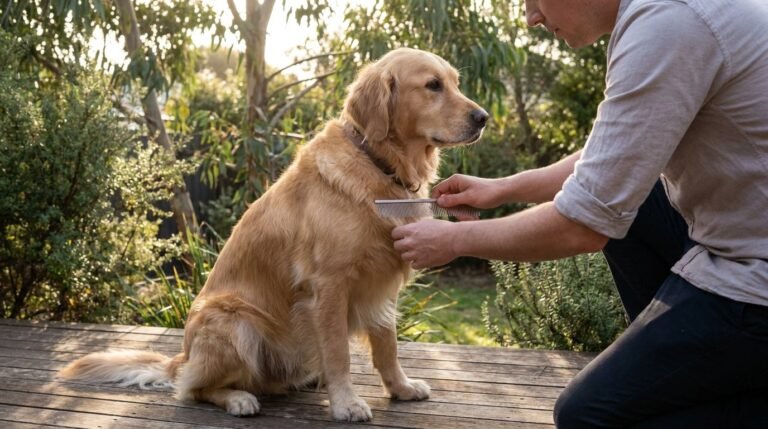
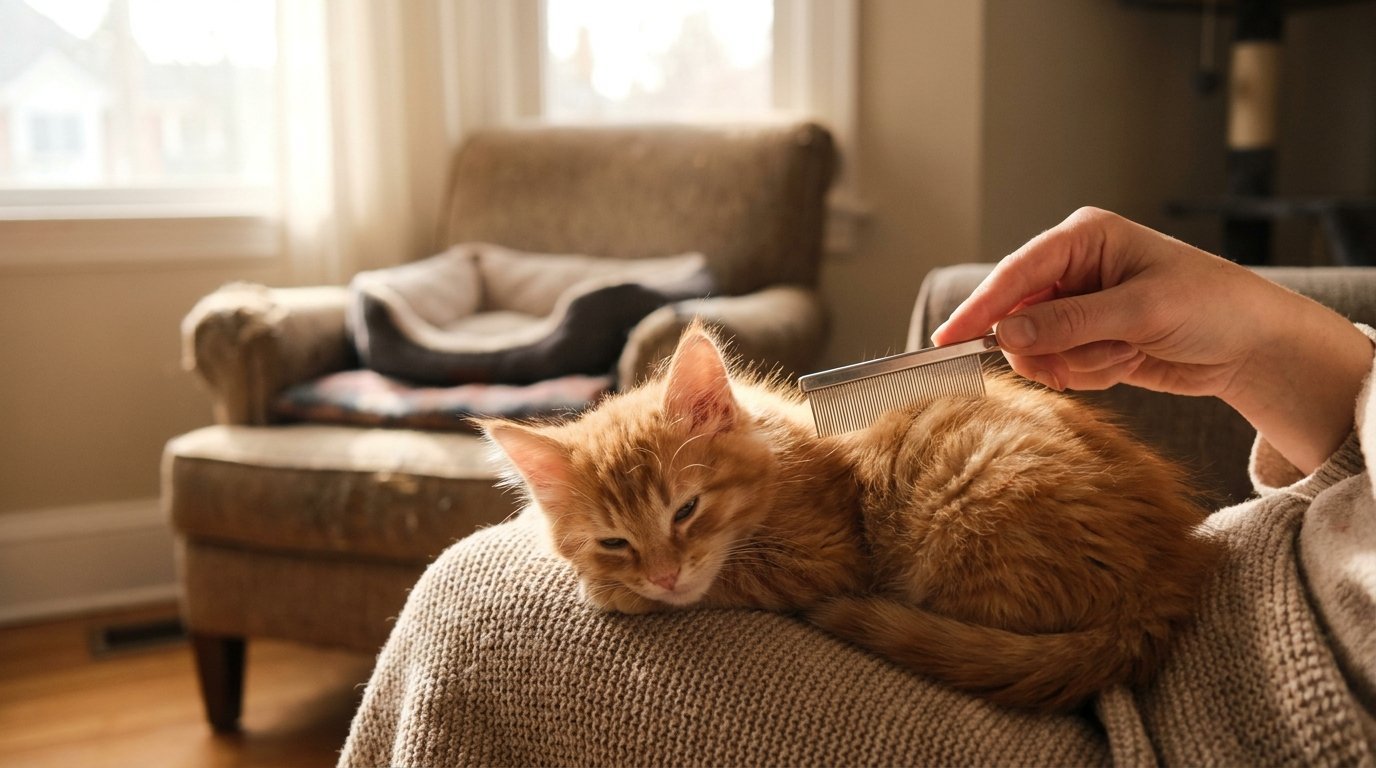
A fine-toothed flea comb removes adult fleas mechanically. Comb the pet over a sheet of white paper or into a bowl of soapy water (the soapy water drowns the fleas you catch). Do it daily for the first 7-10 days, then 2-3 times a week for maintenance.
2. Environmental control
- Vacuum daily
- Wash pet bedding on hot wash
- Restrict the kitten or puppy to a small, easily-cleaned area for the first 1-2 weeks
- The fewer eggs that fall into the carpet, the smaller the population that develops
3. Professional environmental treatment
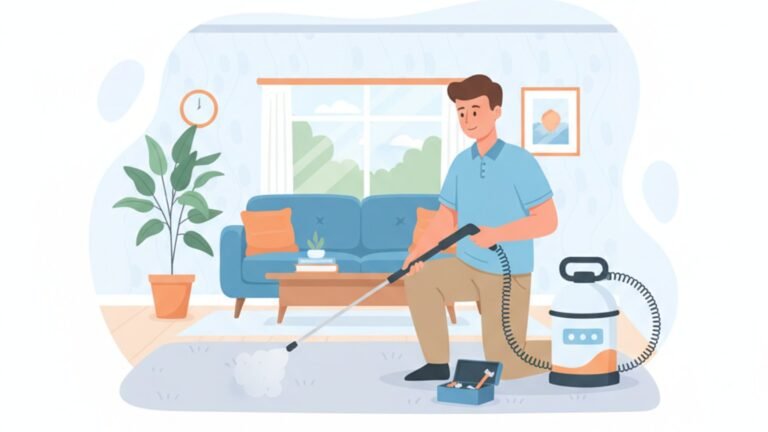
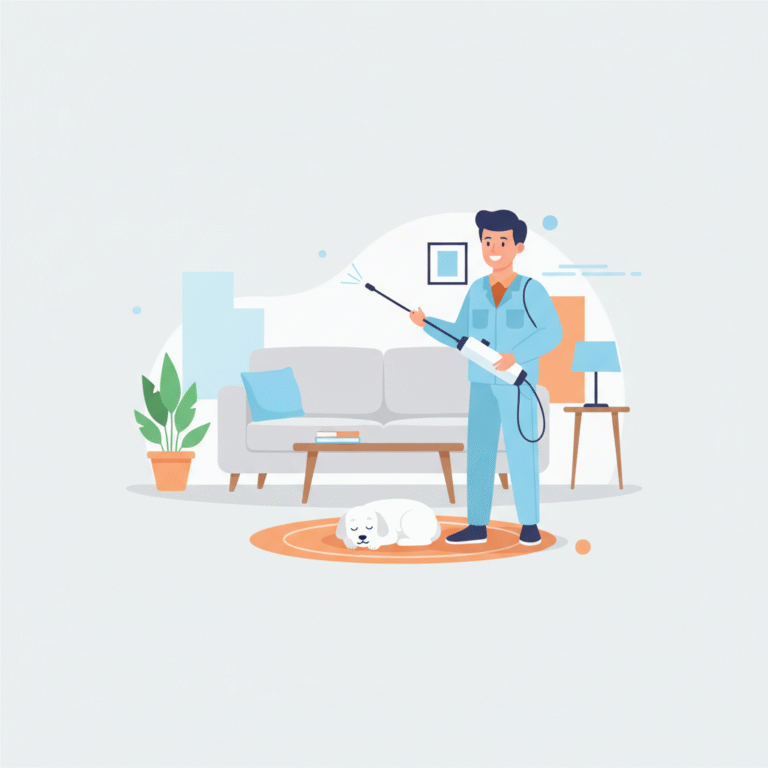
Once the pet is moved to a safe area (separate room or temporarily relocated), the rest of the house can be treated with standard products. The carpet residual is non-toxic to mammals once dry (2-4 hours after application). The pet returns to the treated area only after dry.
When to involve a professional pest controller
If you’ve got a kitten or puppy under 8 weeks AND an active flea infestation in the home, pet-only treatment isn’t enough. The eggs already in the carpet will hatch and re-infest the pet repeatedly until the environment is clear.
The professional approach
Getting your house sprayed for fleas while the young pet is temporarily relocated (a separate room, a friend’s place for a day, the vet’s). Dry time is 2-4 hours. Once dry, the products are non-toxic to mammals at the application rate. Pet returns home, environmental fleas die out over 1-2 weeks, and you can start the pet on a preventative once they reach the minimum age.
For pregnant animals
Similar approach. Talk to the operator at booking, most companies (us included) can adjust products and scheduling to minimise pet exposure.
Common mistakes with young pets and fleas
Using adult-pet products on a kitten or puppy
Even diluted versions of products marketed for adult animals can cause problems in young animals. Some over-the-counter flea collars are particularly risky. Stick to vet-approved options at the right age.
Treating only the pet
The pet sheds flea eggs into the carpet for weeks before symptoms become obvious. By the time you notice fleas on the kitten, the carpet population is already building. Pet preventative kills the fleas that bite the pet, it doesn’t kill the eggs that have already fallen.
Bathing with adult flea shampoo
Skip this. Use mild kitten/puppy shampoo only if a bath is needed for general cleanliness. Mechanical flea removal (combing) handles flea load on the pet.
Related guides on flea control around pets
- Flea bites: identification, symptoms, and treatment — because once a kitten or puppy is hosting fleas, you and the rest of the household will start seeing bites too.
- How to deal with fleas in your Melbourne home: a practical guide — the day-by-day workflow when the home is the source.
- Flea control Melbourne: complete guide to professional flea pest control — pet-safe service options when the kittens or puppies need protection during treatment.
Frequently asked questions
What’s the youngest a kitten can have flea treatment?
Most preventatives are approved from 8 weeks and 2kg. Before that, flea combing + environmental control is the only safe option. Talk to your vet for younger kittens.
Are flea bombs safe with a kitten in the house?
No. Flea bombs (foggers) deposit residue everywhere including surfaces the kitten will lick. Avoid foggers entirely. Targeted professional spray application is safer.
Can I use Bravecto on a 6-week-old kitten?
No, minimum age is 8 weeks. Wait until the kitten is at least 8 weeks and 2kg. Use flea combing in the meantime.
How long should the kitten stay out of treated rooms?
2-4 hours minimum (until the spray is fully dry). Some operators recommend 6-8 hours for very young kittens to be extra cautious.
Booking flea treatment with kittens or puppies in the home
When you call to book, mention upfront that you’ve got a kitten, puppy, or pregnant pet. We’ll schedule the treatment when you can keep the animal out of treated rooms for the dry time, talk through which areas to leave untreated (the kitten’s safe room, for example), and discuss any specific product preferences if you’ve got chemical-sensitive pets.
Cost is the standard $175-$300 across Greater Melbourne. The treatment scope and duration are the same. The only adjustment is scheduling and pet relocation.
For the broader picture of pet-safe flea control, see our flea control Melbourne overview. To book, call (03) 8692 4747.