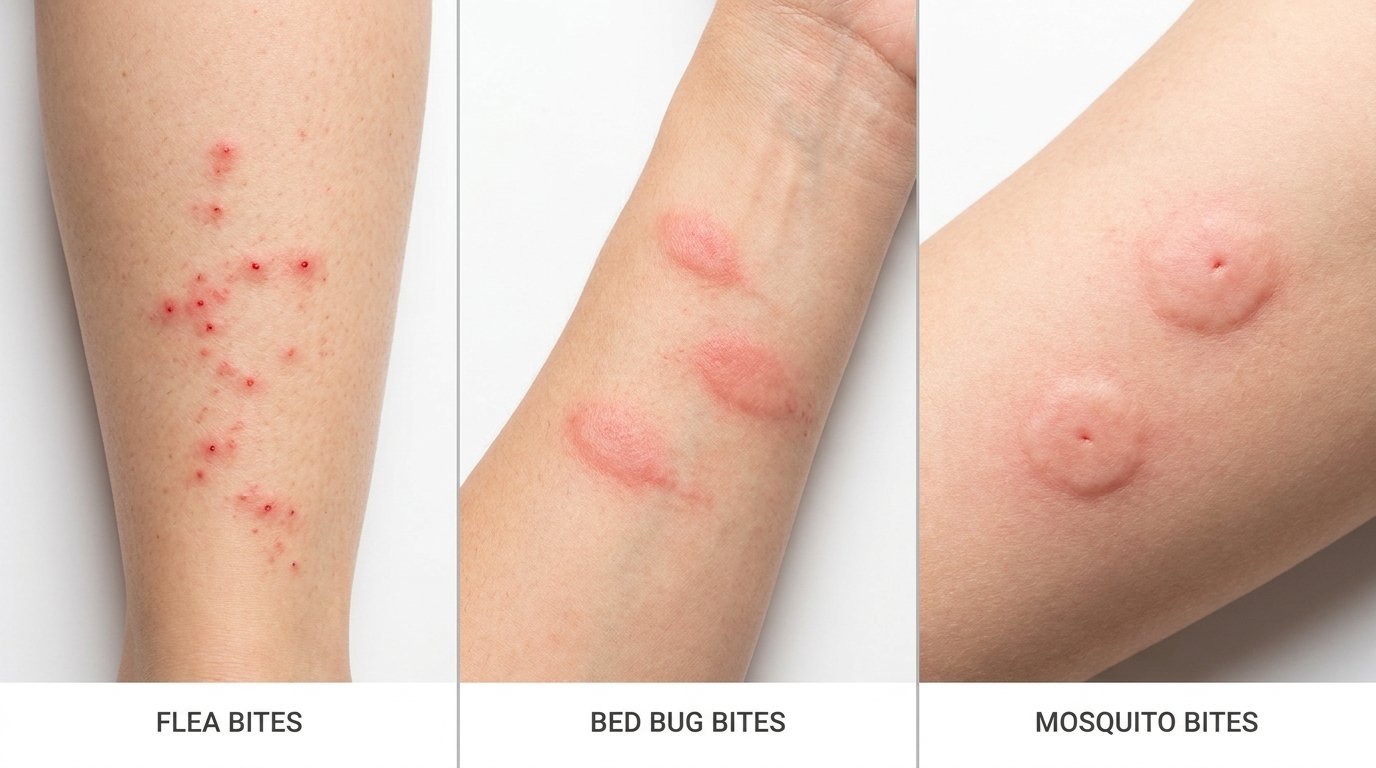
Flea bites are usually the first physical sign you’ve got an infestation. They turn up overnight, mostly on ankles and lower legs, and they itch for days. This guide covers what flea bites look like, how to tell them apart from bed bug or mosquito bites, what to do for the itch, and when bites mean you need professional flea treatment.
Key takeaways
- Flea bites are 2-5mm red bumps with a darker red centre, clustered in groups of 3-4 on lower legs.
- Distinguished from bed bug bites by location, size, and central dot.
- Most resolve on their own with antihistamine cream and cold compress.
- One-off bites = stray flea. Recurring daily bites = active infestation.
- Professional treatment in Melbourne: $175-$300, clears in one visit.
What flea bites look like
Flea bites appear as small red bumps with a darker red dot in the centre, usually 2-5mm across. They cluster in groups of three or four, often in straight or roughly straight lines (the “breakfast, lunch, dinner” pattern named for how a flea bites repeatedly along the same blood vessel).
Where bites appear on the body
Location matters. Adult fleas are weak fliers and live in carpet pile or ground vegetation, so they bite the lowest exposed skin they can reach: ankles, calves, the back of the knee, and the lower thigh. Bites higher up the body are unusual unless you’ve been sitting or lying directly on infested furniture or pet bedding.
Why they itch so much
The itch comes from the flea’s saliva, which contains an anticoagulant. Most people develop the bumps within hours and the itch lasts 3-5 days. Some people barely react. Others develop strong allergic responses with larger welts and longer-lasting itch (flea allergy dermatitis).
Flea bites vs bed bug bites vs mosquito bites
Three things to look for.
Location
- Fleas: lower legs and ankles
- Bed bugs: anywhere skin is exposed against the mattress (often back, arms, shoulders)
- Mosquitoes: anywhere bare skin is exposed (face, arms, legs)
Pattern
Flea bites cluster in lines of 3-4. Bed bug bites also cluster in lines but tend to be in straight rows. Mosquito bites are usually isolated single bites, not clustered.
Size and centre
- Flea bites: small (2-5mm) with a distinct dark red dot in the centre
- Bed bug bites: larger (5-10mm), red, swollen, often without the central dot
- Mosquito bites: puffy raised welts that come up fast and tend to fade within a day
Diagnostic move when you can’t tell
If you can’t figure out which it is and the bites keep appearing, look in the right places:
- For fleas: check pet bedding, carpet edges, and your white socks after walking slowly across carpet (fleas jump onto socks)
- For bed bugs: check the seams of the mattress for small dark spots (digested blood) and shed skins
Both findings point clearly to the cause.
Treating flea bites at home
Most flea bites resolve on their own.
Standard sequence
- Wash the area with soap and cool water
- Don’t scratch (scratching breaks the skin and risks secondary infection)
- Apply a cold compress for 10 minutes to reduce swelling
- Use an over-the-counter antihistamine cream or hydrocortisone 1% to manage the itch
- Oral antihistamines (loratadine, cetirizine) help if you’ve got many bites or a strong reaction
When to see a GP
See a GP if you notice signs of infection (spreading redness, pus, fever) or if the reaction is unusually large or persistent. People with flea allergy dermatitis sometimes need prescription-strength topical steroids.
For pets
For pets, the bites cause scratching that can lead to hot spots and skin infections. Talk to your vet about flea preventative (NexGard, Bravecto, Advantix, Comfortis are common Melbourne options). The pet preventative kills fleas that bite the pet but doesn’t treat the home environment.
When flea bites mean you need a professional
One or two bites after a beach walk in summer? Probably a stray flea you picked up. Treat the bite, watch for new ones over the next week, and skip professional treatment.
Signs you’ve got an infestation
- New bites every morning for more than a week
- Bites on multiple household members
- Pet scratching despite being on flea preventative
- Visible adult fleas every time you do the white sock test
- Small black specks (flea dirt) in pet bedding or along skirting boards
If you’ve ticked any of those boxes, the bites won’t stop until the home environment is treated. Adult fleas are only 5% of the population. The other 95% (eggs, larvae, pupae) is hidden in the carpet pile, soft furnishings, and pet bedding. Household sprays kill the adults but don’t break the cycle, which is why DIY rounds usually fail and bites keep appearing 2-3 weeks later.
Frequently asked questions
How long do flea bites last?
Most resolve in 3-5 days with home treatment. Larger reactions or signs of allergic dermatitis can take 1-2 weeks.
Can flea bites cause infection?
Bites themselves don’t cause infection, but scratching can break the skin and let bacteria in. Cold compress + antihistamine cream stops most of the urge to scratch.
Why does only one person in the house get bitten?
Some people are more reactive to flea saliva. Other household members are bitten too, but the bites don’t itch or develop into visible welts. The infestation is still active.
Are flea bites dangerous?
For most people, no. The bites cause itch and minor inflammation. Cat fleas can carry tapeworm and Bartonella (“cat scratch fever”) but transmission to humans is uncommon. Pets are at higher risk than people.
Booking professional flea treatment
Professional flea treatment in Melbourne costs $175-$300, takes 60-90 minutes, and clears the infestation in one visit. Same-day bookings available across Greater Melbourne.
For the comprehensive guide, see our flea control Melbourne overview. For the carpet biology behind the infestation cycle, see our carpet flea control guide.
To book directly, call (03) 4060 1090.