Professional flea treatment: how it actually works
Most people picture flea control as one man with a sprayer wetting the carpet. The real method is more deliberate than that. A professional flea treatment is built around the flea life cycle, not just the fleas you can see today, and that is the part that decides whether they come back. This guide explains what is in the products we use, how the treatment reaches eggs and larvae, and why the same job done properly works when a supermarket can does not.
Key takeaways
- A professional flea treatment uses two product types: an adulticide that kills live fleas and a growth regulator that stops eggs and larvae developing.
- Insect growth regulators are the reason the result lasts, because they break the cycle rather than just clearing today’s adults.
- The treatment is applied to carpet, floor edges and pet resting spots where the immature stages actually live.
- Outdoor zones like shaded soil and under decks often need treating, or the yard reseeds the house.
- A planned second visit catches pupae that hatch after the first application, which is normal and not a failure.
What a professional flea treatment includes
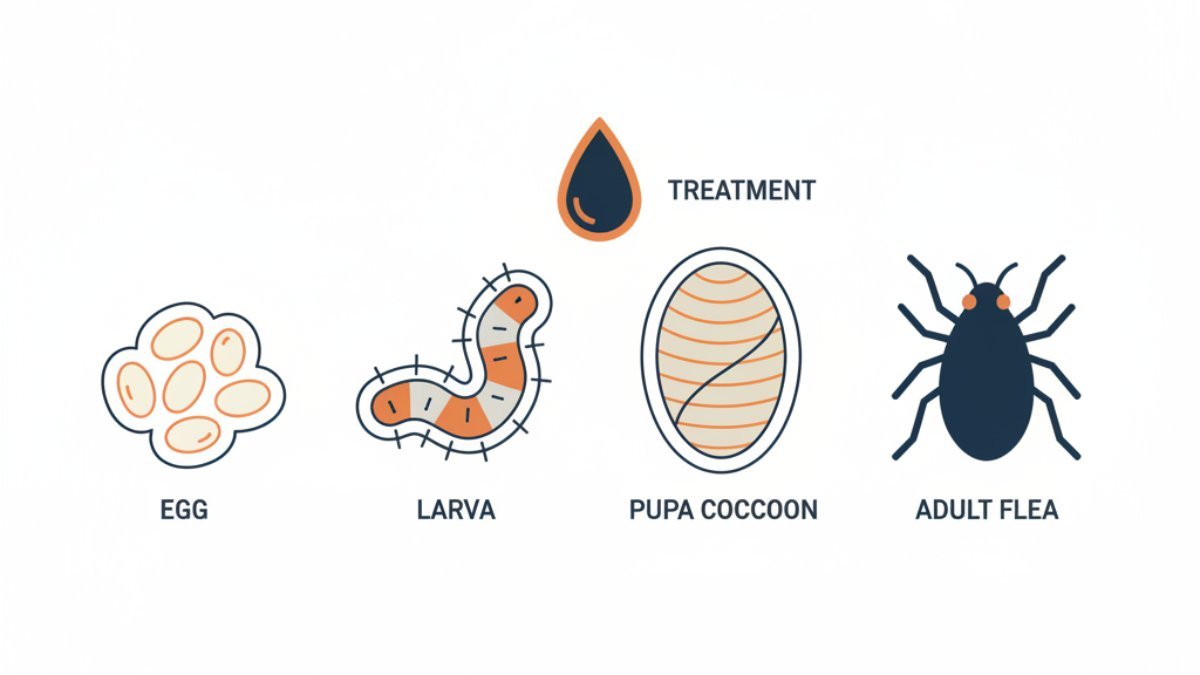
A treatment that only kills adult fleas is half a treatment. The fleas you see are roughly five per cent of the problem, so the rest of the job has to reach what you cannot see. Two products do the work in a professional flea treatment.
The adulticide that clears live fleas
The first product is an adulticide, a contact insecticide that kills the adult fleas already moving through the home. This is the fast-acting part, and it is why you see a sharp drop in biting within a day or two. On its own it is what most DIY sprays offer. The trouble is that it does nothing to the eggs and larvae waiting in the carpet, so used alone its effect fades within a week.
The growth regulator that breaks the cycle
The second product is an insect growth regulator, the quiet workhorse of any professional flea treatment. It does not kill on contact. Instead it stops flea eggs and larvae from maturing into breeding adults, which shuts the life cycle down at the source. We explain how this fits the wider plan in our flea control Melbourne treatment guide.
How the treatment targets the flea life cycle
To understand why the method works, it helps to know where fleas actually spend their lives. Very little of it is on your pet.
Where the eggs and larvae hide
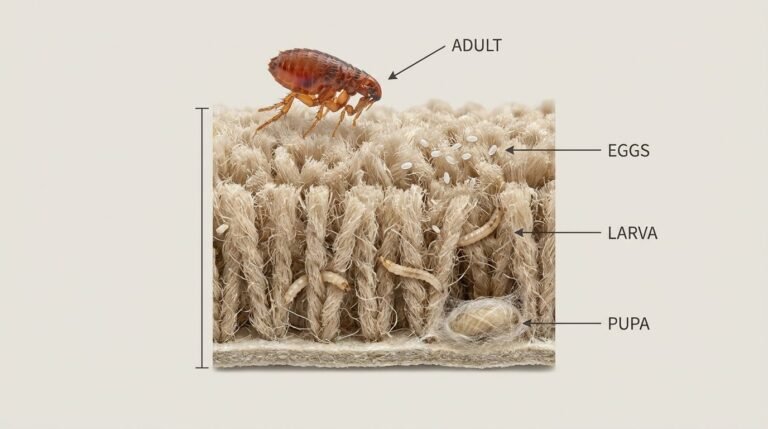
Adult fleas lay eggs on the host, but the eggs drop off wherever the animal walks, rests and sleeps. They settle deep into carpet pile, into the gaps between floorboards, and through pet bedding. Larvae hatch and burrow away from light, feeding on debris in those same spots. A treatment has to be applied to those surfaces, or it never reaches the flea infestation at its source.
Why the pupae need a follow-up
Flea pupae are the tough stage, sealed inside a sticky cocoon that shrugs off insecticide and can wait weeks for a host to walk past. No first treatment can kill a flea still in its cocoon. That is why we plan a second visit roughly two weeks on, timed to catch those pupae once they hatch and before they breed. A follow-up is normal practice, not a sign the first visit failed.
Indoor and outdoor treatment
A flea problem rarely respects the back door. If your pet moves between the house and the yard, both sides need attention or one keeps feeding the other.
Treating the indoor zones
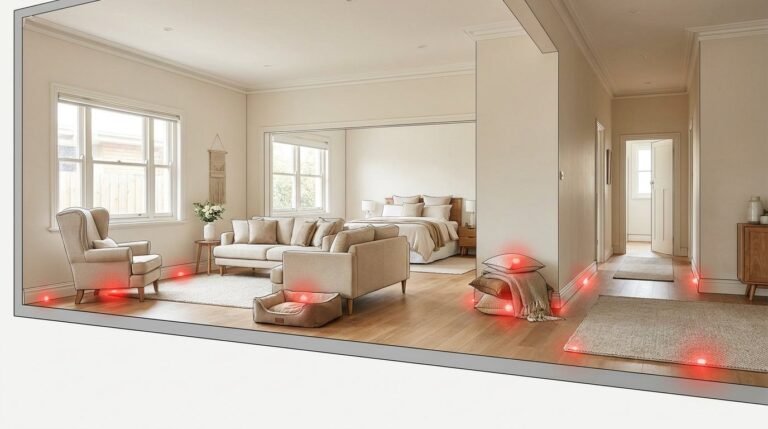
Indoors, the focus is carpet, rugs, the edges of timber floors and the pet’s regular resting spots. Hard floors still need the edges and skirting gaps treated, since larvae gather there. We ask households to vacuum first and clear the floor, because that lifts carpet fibres and gives the products a clear path to the surfaces below.
Treating the outdoor zones
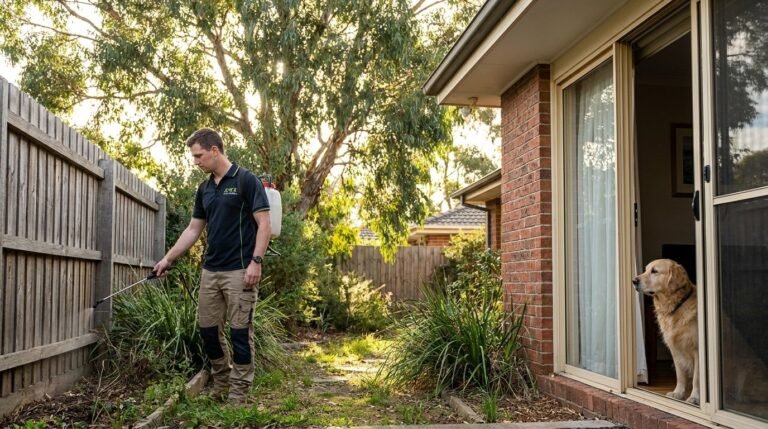
Outdoors, fleas survive in shaded, sheltered ground rather than open lawn baked by sun. Soil under decks and along fence lines where the dog lies down is where they hold on. A treatment that skips the yard leaves a reservoir that walks back inside on the pet within days. Sound pest control treats the property as one connected space, indoors and out.
Why professional flea treatment outperforms DIY
DIY is not useless, it is just incomplete. A shop spray gives you the adulticide and none of the timing or the growth regulator that make the result hold.
According to the Better Health Channel, a flea problem is only cleared when both the pet and the household environment are treated, because the immature stages live in floors and soft furnishings.
Coverage, products and timing
The gap between a professional flea treatment and a DIY attempt comes down to a few things the homeowner cannot easily get. One is the right pairing of an adulticide with a growth regulator. Another is full coverage of every surface where larvae hide. The last is a follow-up visit timed to the life cycle, and a single shop can offers none of them.
What results to expect from your treatment
Honest expectations matter, because a good treatment still works to a timeline rather than an instant switch.
The realistic recovery timeline
Expect a clear drop in adult fleas within one to two days as the adulticide takes hold. Over the next two weeks a few stragglers can still hatch from cocoons, which is expected and is exactly what the second visit handles. By the end of that window most homes are comfortable again. A professional flea treatment backed by a warranty gives you a return visit if anything lingers, so you are not left guessing.
Frequently asked questions
What products does a professional flea treatment use?
Two main types. An adulticide kills the live fleas on contact, and an insect growth regulator stops eggs and larvae from maturing. The pairing is what clears the whole life cycle rather than just today’s adults.
How is a professional treatment different from a shop spray?
A shop spray usually offers only the adulticide, with no growth regulator and no planned follow-up. A professional treatment pairs both products, covers the surfaces where larvae hide, and times a second visit to the cycle.
Why is a second visit part of the treatment?
Flea pupae are sealed in a cocoon that resists insecticide and hatch over the following weeks. The first visit cannot reach them, so a second visit about two weeks later catches the new adults before they breed.
Does the yard really need treating too?
If your pet spends time outside, usually yes. Fleas survive in shaded soil under decks and along fences, and an untreated yard reseeds the house through the pet within days.
How long before the fleas are gone?
Adult numbers drop within one to two days. A few more can hatch over the next fortnight, which the second visit handles, so most Melbourne homes feel normal again within a month.
Ready to book a professional flea treatment in Melbourne?
Same-day pet-safe treatment with a 12-month warranty. Get a fixed quote in 2 minutes.
Get My Quote