If you’ve had a pet at a Melbourne rental, end-of-lease flea treatment is non-negotiable. Almost every lease agreement requires it, and your agent will withhold bond if the treatment isn’t done by a licensed operator with a compliant receipt. This page covers what Victorian rental law requires, what agents actually inspect, our same-day end-of-lease process, what the receipt has to contain, and what the treatment costs across Melbourne.
Key takeaways
- End of lease flea treatment in Melbourne: $175-$300, dated within 7 days of move-out.
- Receipt must come from a licensed Victorian operator with the licence number on the document.
- Required for any rental with pets, even indoor-only cats.
- Same-day bookings available across rental-heavy suburbs: Brunswick, Carlton, Footscray, Richmond, Fitzroy, St Kilda.
- Tenants who skip the treatment typically lose $300-$500 of bond when the agent books it themselves.
Why bond inspections include flea treatment
Carpet steam cleaning, wall touch-ups, yard tidy, those are the standard end-of-lease line items. Flea treatment is the one item where agents fight hardest, because the next tenant complains directly to them if the property has fleas.
The agent’s incentive
Agents lose income if a property sits vacant. They also lose reputation if a new tenant moves in and immediately complains about fleas. So they require defensive documentation: a receipt from a licensed pest control operator, dated close to move-out, that they can wave at any future complaint.
Why indoor-only pets still trigger the requirement
Cat fleas (Ctenocephalides felis) are introduced from outside, foxes, possums, other tenants’ pets. An indoor cat can still seed the carpet with eggs that hatch over weeks. The agent’s flea-treatment requirement is a defensive document, not a statement about your pet’s hygiene.
What Victorian rental law actually requires
The Residential Tenancies Act
Victorian rental law (Residential Tenancies Act 1997, updated 2021) requires tenants to return the property in the condition they received it, allowing for fair wear and tear. Pet-related issues fall outside fair wear and tear. Carpet flea infestation, yard damage, scratched walls, all are tenant-responsibility items.
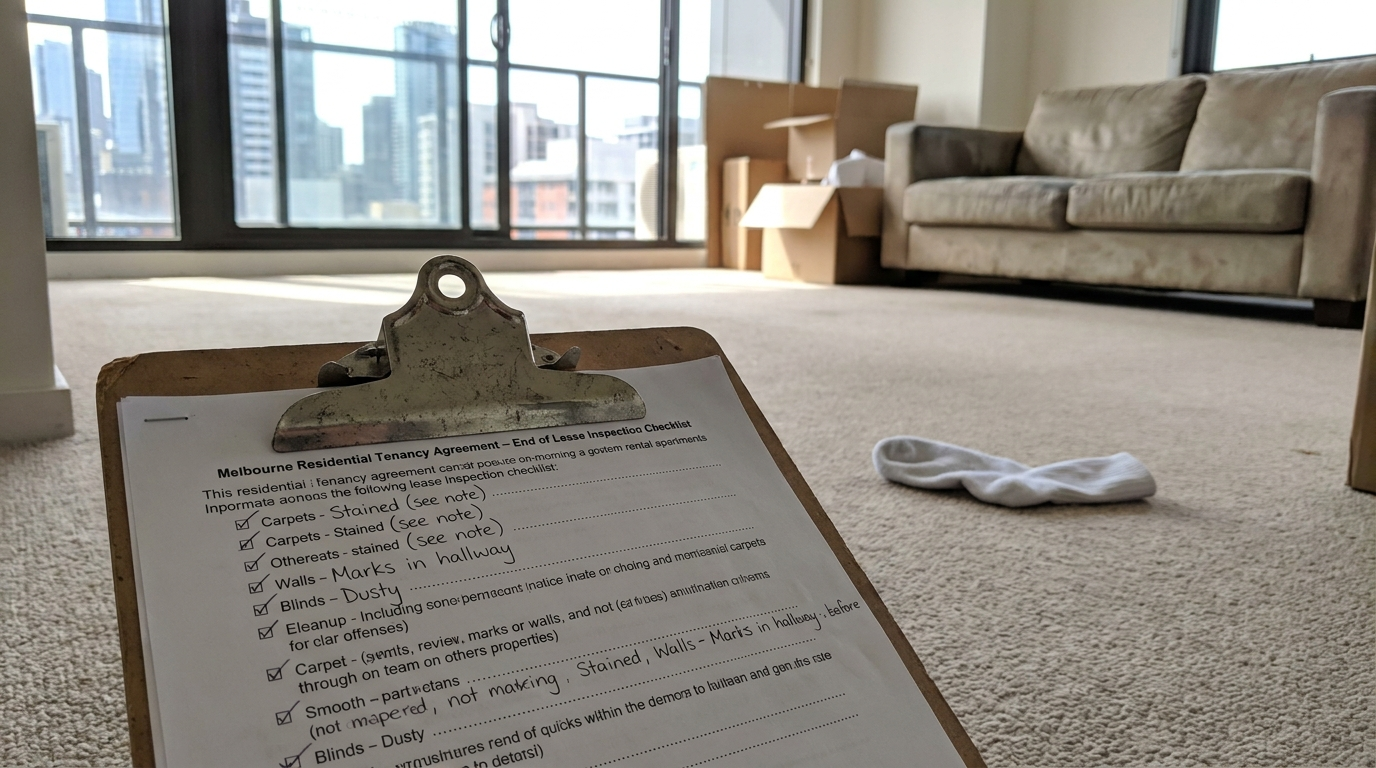
REIV-style standard checklist
The Real Estate Institute of Victoria (REIV) inspection checklist used by most agents includes flea treatment as a specific line item for any property where pets were kept. The receipt requirement is industry-standard, not arbitrary.
What happens if you skip it
If you don’t provide a flea treatment receipt, agents typically book the treatment themselves and deduct from your bond. The agent-booked treatment is usually $300-$500 (mark-up included), versus $175-$300 if you book direct.
What landlords and agents actually check on inspection
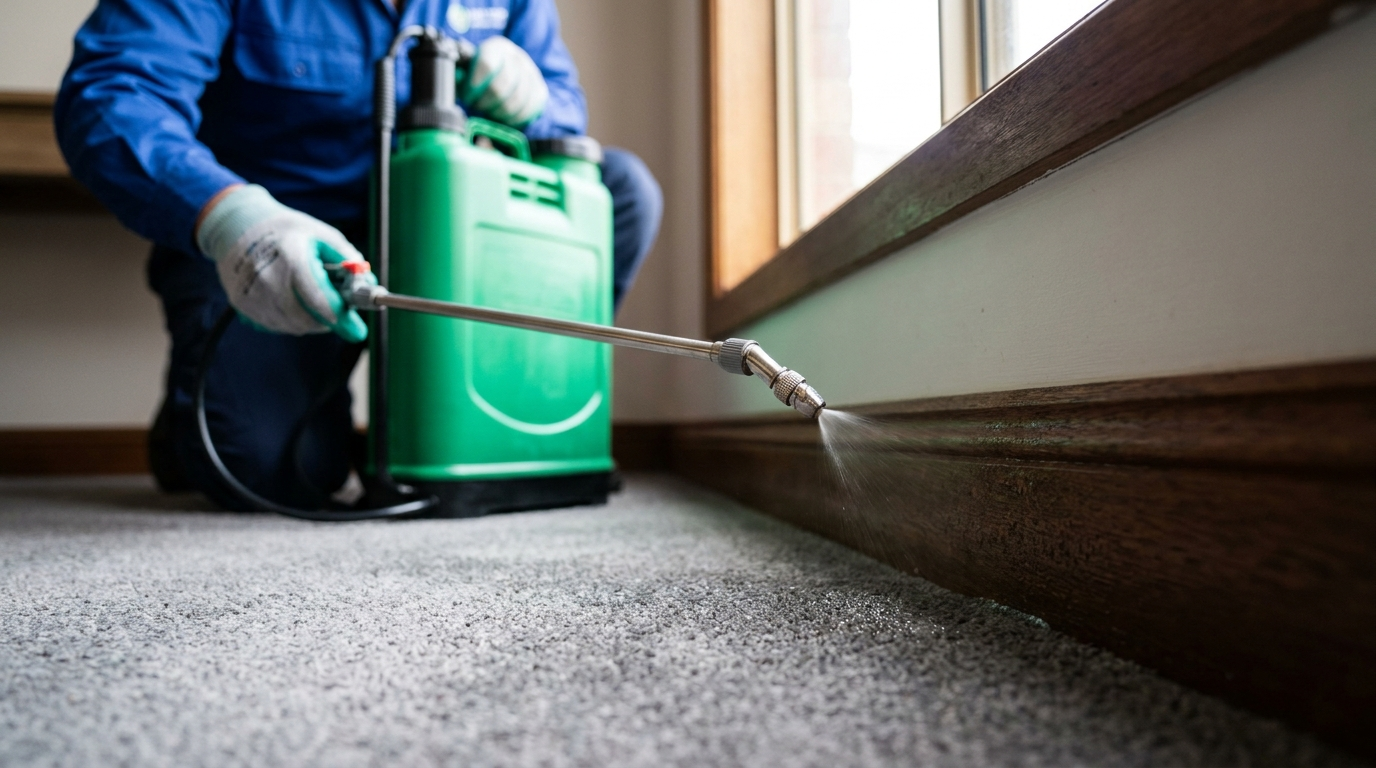
Pet-specific inspection items
- Carpets professionally steam cleaned, receipt required
- Flea treatment by licensed operator, receipt required
- Yard de-poo’d and clear of dig damage, visual inspection
- Walls and skirting boards, checked for pet hair, scratches, paw marks
- Window screens, checked for cat-scratch damage
The order things matter
Sequence the bond clean correctly: vacuum aggressively, then professional flea treatment, then carpet steam clean within 24 hours of the flea treatment (steam cleaning AFTER preserves the residual). For the full sequence, see our bond clean checklist for renters with pets.
Our end-of-lease flea treatment process
1. Booking call
A quick call to book a flea treatment service confirms your move-out date, property size, and whether you’re still in the property or it’s already vacant. We can usually schedule for the day before move-out or move-out morning itself across rental-heavy suburbs (Brunswick, Carlton, Footscray, Richmond, Fitzroy, St Kilda).
2. Treatment
Standard 60-90 minute treatment with adulticide + IGR. Targets carpet pile, skirting boards, soft furnishings, pet bedding (if still present), and any flea-dirt zones.
3. Bond-compliant receipt
Receipt issued before the technician leaves. Specifies “flea treatment” or “flea pest control” (not generic “pest control”), shows the licence number, the property address, and the date. This is what your agent needs to release the bond.
4. Severity tier (fumigation)
For severe infestations or properties that have sat vacant for 3+ months (where dormant pupae will emerge en masse for the next tenant), we offer fumigation as a higher-cost option. See our flea fumigation end of lease guide.
The treatment receipt: what your agent actually needs
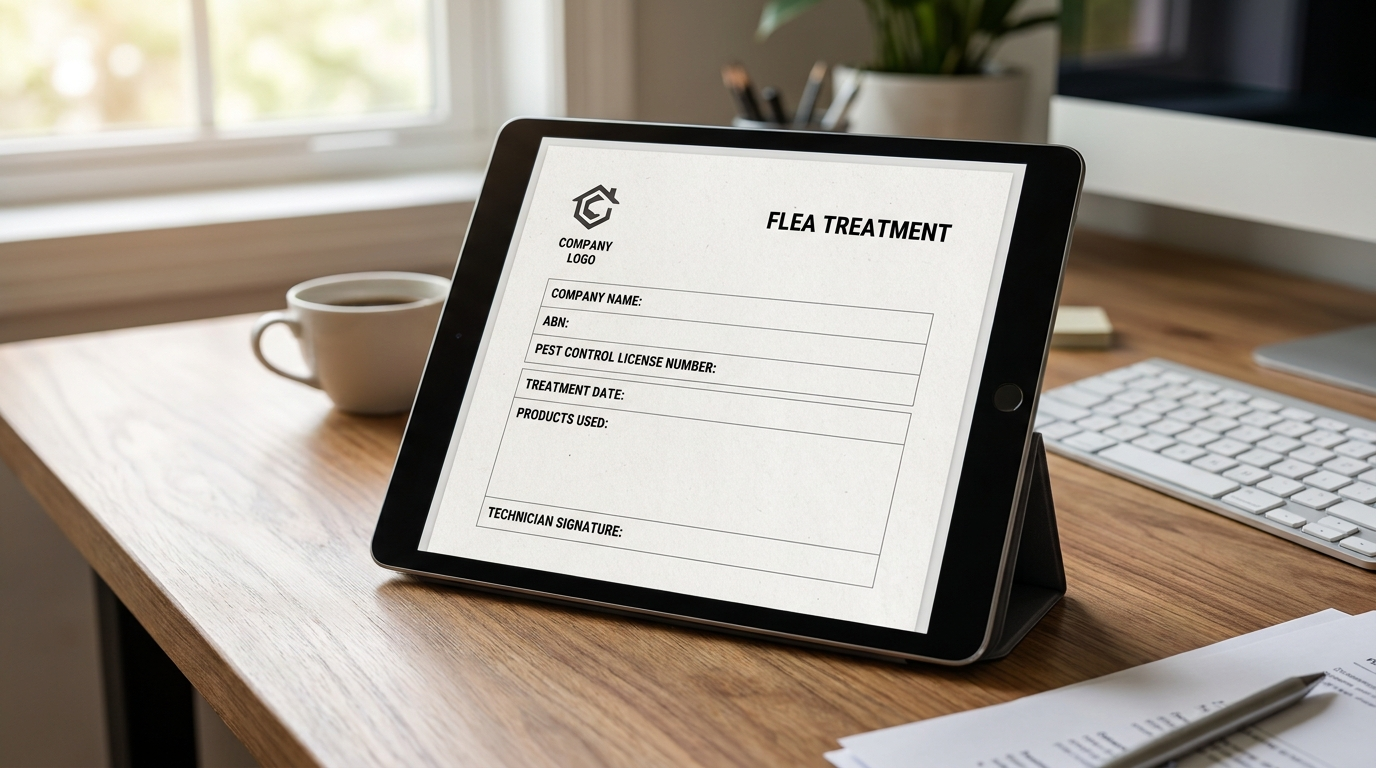
Mandatory receipt elements
- Licensed Victorian pest control operator (licence number on the receipt)
- “Flea treatment” or “flea pest control” specified, generic “pest control” line items often get queried
- Property address matching the lease
- Date within 7 days of move-out
- Products used (active ingredients listed)
Common rejection reasons
Receipts older than 7 days get challenged. Receipts from non-licensed operators (handyman friends, mate-rates jobs) get rejected outright. Receipts that don’t specify “flea treatment” get queried as generic pest work.
If your agent rejects the receipt
Re-book with us and we’ll provide a compliant receipt the same day in most cases. If the rejection is unreasonable, the Victorian Civil and Administrative Tribunal (VCAT) handles bond disputes, but compliant receipts almost never reach that stage.
End of lease flea treatment cost in Melbourne
Standard pricing
End of lease flea treatment in Melbourne sits at $175-$300, the same as standard residential flea control. A 1-2 bedroom flat with mild infestation lands at the lower end. Multi-storey homes or properties with severe contamination land higher.
When fumigation makes sense
For severe end-of-lease infestations, fumigation runs $400-$650. Worth the extra cost when the property has sat vacant for months (dormant pupae problem) or when multiple pets caused widespread contamination. See flea fumigation end of lease for the full breakdown.
Cost of NOT booking
Tenants who skip the treatment typically lose $300-$500 of bond when the agent books it themselves at agent-mark-up rates. Booking direct is always cheaper than letting the agent deduct from bond.
Frequently asked questions
Do I need flea treatment if my pet was indoor-only?
Most agents require it regardless. Cat fleas are introduced from outside (foxes, possums, other tenants’ pets) and an indoor cat can still seed the carpet with eggs. The receipt is a defensive document, not a statement about your pet’s hygiene.
What if my agent rejects the receipt?
Common rejection reasons: receipt from non-licensed operator, receipt dated outside the 7-day window, receipt doesn’t specify “flea treatment”. Re-book with us and we’ll provide a compliant receipt the same day in most cases.
Can I do the treatment myself?
No, agents specifically require a licensed operator’s receipt. DIY treatments with supermarket products won’t satisfy the bond requirement.
How long does the receipt stay valid?
Most agents accept receipts dated within 7 days of move-out. Older than that and the agent can argue the property could have been re-infested in the gap.
Can I do treatment before pets are removed?
Yes. Pets need to stay out of treated rooms for 2-4 hours while product dries, then they can re-enter normally. Most end-of-lease bookings happen with the pet still in the property.
More on end-of-lease flea treatment
For the broader bond-return checklist (carpet, walls, yard, and the order to do them in), see our bond clean checklist for renters with pets. For severe end-of-lease infestations, see our flea fumigation end of lease guide.
Booking your end-of-lease flea treatment
We service rental-heavy Melbourne suburbs including Brunswick, Carlton, Footscray, Richmond, Fitzroy, St Kilda, Hawthorn, Caulfield, Coburg, Northcote, and the broader inner-city and bayside areas. Same-day bookings available before your inspection.
Call (03) 8692 4747 for end-of-lease flea treatment with bond-compliant receipt.